 | InDesign SDK 20.5 |
#include <IReferencePointData.h>
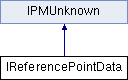
Public Types | |
| enum | ReferencePointPosition { kTopLeftReferencePoint = 0, kFirstReferencePointPosition = kTopLeftReferencePoint, kTopCenterReferencePoint = 1, kTopRightReferencePoint = 2, kLeftCenterReferencePoint = 3, kCenterReferencePoint = 4, kRightCenterReferencePoint = 5, kBottomLeftReferencePoint = 6, kBottomCenterReferencePoint = 7, kBottomRightReferencePoint = 8, kLastReferencePointPosition = kBottomRightReferencePoint, kOtherReferencePointPosition = 9, kUninitializedReferencePointPosition = 10 } |
| enum | ReferenceAppearance { kNinePoint = 0, kLine = 1, kPoint = 2, kHorizontalGuide = kPoint, kVerticalGuide = 3, kCursor = 4, kDisabled = 5, kRow = 6, kColumn = 7 } |
| enum | { kDefaultIID = IID_IREFERENCEPOINTDATA } |
Public Member Functions | |
| virtual void | SetReferencePointData (const ReferencePointPosition &position, const PBPMPoint &point)=0 |
| virtual ReferencePointPosition | GetPosition__ ()=0 |
 Public Member Functions inherited from IPMUnknown Public Member Functions inherited from IPMUnknown | |
| virtual IPMUnknown * | QueryInterface (PMIID interfaceID) const =0 |
| virtual void | AddRef () const =0 |
| virtual void | Release () const =0 |
Friends | |
| class | RefPointUIUtilsImpl |
Data interface for holding information about the reference point. Each layout view has its own a reference point. In general, you should control the reference point via IRefPointUIUtils, or even at a suite level in IReferencePointSuite, instead of calling these interfaces directly.
What is the current appearance of the reference point proxy.
Enum for describing the reference point position.
| pure virtual |
Return the value of the reference point
| pure virtual |
Set the position in the data interface.
| position | [IN] the reference position to set. |
| point | [IN] the new reference point in global pasteboard coordinates. |
 1.8.3.1
