 | InDesign SDK 20.5 |
#include <IXMLElementCommands.h>
Public Types | |
| enum | { kDefaultIID = IID_IXMLELEMENTCOMMANDS } |
| enum | TableTagPreference { kTagByRow, kTagByColumn, kNone, kTagByRowAndBody } |
Public Member Functions | |
| virtual ErrorCode | CreateElement (const WideString &tagToApply, UIDRef storyUIDRef, TextIndex startTextIndex, TextIndex endTextIndex, const XMLReference &parentXMLR=kInvalidXMLReference, XMLReference *createdElement=nil, bool16 doVerify=kTrue, bool16 useExistingMarkers=kFalse)=0 |
| virtual ICommand * | CreateElementCommand (const WideString &tagToApply, UIDRef storyUIDRef, TextIndex startTextIndex, TextIndex endTextIndex, const XMLReference &parentXMLR=kInvalidXMLReference, bool16 doVerify=kTrue, bool16 useExistingMarkers=kFalse)=0 |
| virtual ErrorCode | CreateElement (const WideString &tagToApply, UIDRef storyUIDRef, const RangeData &range, const XMLReference &parentXMLR=kInvalidXMLReference, XMLReference *createdElement=nil, bool16 doVerify=kTrue, bool16 useExistingMarkers=kFalse)=0 |
| virtual ICommand * | CreateElementCommand (const WideString &tagToApply, UIDRef storyUIDRef, const RangeData &range, const XMLReference &parentXMLR=kInvalidXMLReference, bool16 doVerify=kTrue, bool16 useExistingMarkers=kFalse)=0 |
| virtual ErrorCode | CreateElement (UID tagToApply, UIDRef storyUIDRef, TextIndex startTextIndex, TextIndex endTextIndex, const XMLReference &parentXMLRef=kInvalidXMLReference, XMLReference *createdElement=nil, bool16 doVerify=kTrue, bool16 useExistingMarkers=kFalse)=0 |
| virtual ICommand * | CreateElementCommand (UID tagToApply, UIDRef storyUIDRef, TextIndex startTextIndex, TextIndex endTextIndex, const XMLReference &parentXMLRef=kInvalidXMLReference, bool16 doVerify=kTrue, bool16 useExistingMarkers=kFalse)=0 |
| virtual ErrorCode | CreateElement (const WideString &tagToApply, UID contentItem, const XMLReference &parentXMLRef, int32 indexInParent, XMLReference *createdElement=nil, bool16 doVerify=kTrue)=0 |
| virtual ErrorCode | CreateElement (UID tagToApply, UID contentItem, const XMLReference &parentXMLRef, int32 indexInParent, XMLReference *createdElement=nil, bool16 doVerify=kTrue)=0 |
| virtual ErrorCode | CreateElement (const WideString &tagToApply, const UIDRef &table, GridID anchor, const GridSpan &span, XMLReference *createdElement=nil, bool16 doVerify=kTrue)=0 |
| virtual ErrorCode | CreateElement (UID tagToApply, const UIDRef &table, GridID anchor, const GridSpan &span, XMLReference *createdElement=nil, bool16 doVerify=kTrue)=0 |
| virtual ErrorCode | CreateElement (const WideString &tagToApply, const UIDRef &tableModelUIDRef, GridID cellGridID, XMLReference *createdElement=nil, bool16 doVerify=kTrue)=0 |
| virtual ErrorCode | CreateElement (UID tagToApply, const UIDRef &tableModelUIDRef, GridID cellGridID, XMLReference *createdElement=nil, bool16 doVerify=kTrue)=0 |
| virtual ICommand * | CreateElementCommand (UID tagToApply, const UIDRef &tableModelUIDRef, GridID cellGridID, bool16 doVerify=kTrue)=0 |
| virtual ErrorCode | CreateElement (const XMLDTDInsertElement &xmlDTDInsertElement, XMLReference *createdElement=nil, bool16 doVerify=kTrue)=0 |
| virtual ErrorCode | CreateElement (UID tagToApply, const UIDRef &storyUIDRef, UID contentItem, bool16 addToDocRefList, XMLReference *createdElement=nil, bool16 doVerify=kTrue)=0 |
| virtual ErrorCode | CreateTableElement (const WideString &tableTagToApply, const WideString &tableCellTagToApply, const UIDRef &storyUIDRef, TextIndex textIndex, XMLReference *createdTableElement=nil, bool16 doVerify=kTrue)=0 |
| virtual ICommand * | CreateTableElementCommand (const WideString &tableTagToApply, const WideString &tableCellTagToApply, const UIDRef &storyUIDRef, TextIndex textIndex, bool16 doVerify=kTrue)=0 |
| virtual ErrorCode | CreateTableElement (UID tableTagToApply, UID tableCellTagToApply, const UIDRef &storyUIDRef, TextIndex textIndex, XMLReference *createdTableElement=nil, bool16 doVerify=kTrue)=0 |
| virtual ICommand * | CreateTableElementCommand (UID tableTagToApply, UID tableCellTagToApply, const UIDRef &storyUIDRef, TextIndex textIndex, bool16 doVerify=kTrue)=0 |
| virtual ErrorCode | CreateTableElement (const WideString &tableTagToApply, const WideString &tableCellTagToApply, const UIDRef &tableModelUIDRef, XMLReference *createdTableElement=nil, bool16 doVerify=kTrue)=0 |
| virtual ICommand * | CreateTableElementCommand (const WideString &tableTagToApply, const WideString &tableCellTagToApply, const UIDRef &tableModelUIDRef, bool16 doVerify=kTrue)=0 |
| virtual ErrorCode | CreateTableElement (UID tableTagToApply, UID tableCellTagToApply, const UIDRef &tableModelUIDRef, XMLReference *createdTableElement=nil, bool16 doVerify=kTrue)=0 |
| virtual ICommand * | CreateTableElementCommand (UID tableTagToApply, UID tableCellTagToApply, const UIDRef &tableModelUIDRef, bool16 doVerify=kTrue)=0 |
| virtual ErrorCode | CreateTableElement (const TableTagData &tableTagData, const UIDRef &tableModelUIDRef, XMLReference *createdTableElement=nil, bool16 doVerify=kTrue)=0 |
| virtual ErrorCode | CreateTableElement (const TableTagData &tableTagData, const UIDRef &storyUIDRef, TextIndex textIndex, XMLReference *createdTableElement=nil, bool16 doVerify=kTrue)=0 |
| virtual ICommand * | CreateTableElementCommand (const TableTagData &tableTagData, const UIDRef &tableModelUIDRef, bool16 doVerify=kTrue)=0 |
| virtual ICommand * | CreateTableElementCommand (const TableTagData &tableTagData, const UIDRef &storyUIDRef, TextIndex textIndex, bool16 doVerify=kTrue)=0 |
| virtual ErrorCode | CreateStyleToTagElements (const UIDRef &docUIDRef, UID storyTagUID=kInvalidUID)=0 |
| virtual ErrorCode | DeleteElement (const XMLReference &deleteElementXMLRef, bool16 deleteChildren, bool16 deleteInSameStoryOnly=kFalse, bool16 reconnectChildren=kFalse, bool16 doVerify=kTrue)=0 |
| virtual ICommand * | DeleteElementCommand (const XMLReference &deleteElementXMLRef, bool16 deleteChildren, bool16 deleteInSameStoryOnly=kFalse, bool16 reconnectChildren=kFalse, bool16 doVerify=kTrue)=0 |
| virtual ErrorCode | RangeDeleteElement (const UIDRef &storyUIDRef, TextIndex startTextIndex, TextIndex endTextIndex)=0 |
| virtual ErrorCode | RangeDeleteElement (const UIDRef &storyUIDRef, const RangeData &range)=0 |
| virtual ICommand * | RangeDeleteElementCommand (const UIDRef &storyUIDRef, TextIndex startTextIndex, TextIndex endTextIndex)=0 |
| virtual ErrorCode | DeleteElementAndContent (const XMLReference &deleteElementXMLRef, bool16 deletePageItems=kFalse)=0 |
| virtual ErrorCode | MoveElement (const XMLReference &moveElementXMLRef, const XMLReference &newParentXMLRef, int32 newIndexInParent, TextIndex contentOffset, bool16 doVerify=kTrue)=0 |
| virtual ErrorCode | PlaceElement (const XMLReference &elementToPlace, const UIDRef &graphicFrame)=0 |
| virtual ErrorCode | UnplaceElement (const UIDRef &elementToUnplace)=0 |
| virtual ICommand * | UnplaceElementCommand (const UIDRef &elementToUnplace)=0 |
| virtual ErrorCode | SetElement (const XMLReference &elementRef, UID tag)=0 |
| virtual ErrorCode | SetElement (const XMLReference &elementRef, const WideString &tag)=0 |
| virtual ErrorCode | SetElement (const XMLDTDReplaceElement &replaceElement)=0 |
| virtual ErrorCode | DeleteElementContent (const XMLReference &elementRef)=0 |
| virtual ErrorCode | SetTableTagPreference (const XMLReference &tableElement, TableTagPreference newSetting, const TableTagData &tableTagData)=0 |
| virtual ErrorCode | MakeParentStoryThreadTagged (ITextStoryThread *textStoryThread, bool16 doVerify=kTrue)=0 |
 Public Member Functions inherited from IPMUnknown Public Member Functions inherited from IPMUnknown | |
| virtual IPMUnknown * | QueryInterface (PMIID interfaceID) const =0 |
| virtual void | AddRef () const =0 |
| virtual void | Release () const =0 |
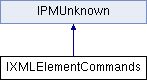
Processes (and creates) commands for creating, deleting, and manipulating XML elements. For instance, there are overloaded CreateElement methods for creating an XML element. Each one takes different arguments, but all of them create a regular element that can hold content. There are methods to process commands to delete elements in different way; directly, through reference or indirectly, through deleting elements that are marking-up a particular text range. There are other methods to change the properties of an element, such as its tag name.
| pure virtual |
Can be used to tag a text range; creates named tag if it doesn't already exist in tag-list. The command will automatically find the XML element which will be the parent of the of the new element, based on the range you pass in. This can be slow on a story with many elements, so optionally you may pass a reference to an element (parentXMLR) in the story to start searching from, to find the element that encloses the text range. Returns a reference to the new element in createdElement, if createdElement is not nil. This and related methods may process a command of type kXMLCreateElementCmdBoss behind the facade.
| tagToApply | name of tag to mark up text range; it will create a tag in the document tag list (IXMLTagList)if one doesn't already exist. |
| storyUIDRef | specifies text model containing text to mark-up |
| startTextIndex | location of the start of the range you want to tag in the text model |
| endTextIndex | location of end of the range you want to tag in the text model |
| parentXMLR | parent reference, can be kInvalidXMLReference, optionally you may pass a reference to an element in the story to start searching from, to find the element that encloses the text range |
| createdElement | [OUT] if createdElement is not nil, contains a reference to the newly created element |
| doVerify | [DEBUG only] whether to perform structure verification after command is executed |
| useExistingMarkers | If kFalse, the create command will create new markers for the element. If kTrue, the create command will use the existing markers at startTextIndex and endTextIndex for the element (caller guarantees they are valid marker characters) |
| pure virtual |
Method to create element and tag a text range
| tagToApply | name of tag to mark up text range; it will create a tag in the document tag list (IXMLTagList) if one doesn't already exist. |
| storyUIDRef | specifies text model containing text to mark-up |
| range | identifies range to mark-up with given tag |
| parentXMLR | parent reference, can be kInvalidXMLReference, optionally you may pass a reference to an element in the story to start searching from, to find the element that encloses the text range |
| createdElement | [OUT] if createdElement is not nil, contains a reference to the newly created element |
| doVerify | [DEBUG only] whether to perform structure verification after command is executed |
| useExistingMarkers | If kFalse, the create command will create new markers for the element. If kTrue, the create command will use the existing markers at the beginning and the end of the range for the element (caller guarantees they are valid marker characters) |
| pure virtual |
Method to create element and tag text range.
| tagToApply | UID of tag to apply |
| storyUIDRef | specifies text model containing text to mark-up |
| startTextIndex | location of the start of the range you want to tag in the text model |
| endTextIndex | location of end of the range you want to tag in the text model |
| parentXMLRef | parent reference, can be kInvalidXMLReference, optionally you may pass a reference to an element in the story to start searching from, to find the element that encloses the text range |
| createdElement | [OUT] if not nil, contains a reference to the newly created element |
| doVerify | [DEBUG only] whether to perform structure verification after command is executed |
| useExistingMarkers | If kFalse, the create command will create new markers for the element. If kTrue, the create command will use the existing markers at startTextIndex and endTextIndex for the element (caller guarantees they are valid marker characters) |
| pure virtual |
Call when you are creating a new element as a child of an existing element, and you want the start and end locations in the text to be generated automatically.
| tagToApply | name of tag; it will create a tag in the document if one doesn't already exist. |
| contentItem | reference to the content the tag will hold (text story, image, or pdf) or a graphic frame |
| parentXMLRef | parent reference, can be kInvalidXMLReference, optionally you may pass a reference to an element in the story to start searching from, to find the element that encloses the text range |
| indexInParent | location within the parent where the new element will be created |
| createdElement | [OUT] if createdElement is not nil, contains a reference to the newly created element |
| doVerify | [DEBUG only] whether to perform structure verification after command is executed |
| pure virtual |
Create an element given a UID of a tag to apply (IXMLTag)
| tagToApply | name of tag; it will create a tag in the document if one doesn't already exist. |
| contentItem | reference to the content the tag will hold (text story, image, or pdf) or a graphic frame |
| parentXMLRef | parent reference, can be kInvalidXMLReference, optionally you may pass a reference to an element in the story to start searching from, to find the element that encloses the text range |
| indexInParent | location within the parent where the new element will be created |
| createdElement | [OUT] if createdElement is not nil, contains a reference to the newly created element |
| doVerify | [DEBUG only] whether to perform structure verification after command is executed |
| pure virtual |
Create an element given a name of a tag to apply
| tagToApply | name of tag; it will create a tag in the document if one doesn't already exist. |
| startCell | first cell in the range to tag |
| endCell | last cell in the range to tag |
| parentXMLRef | parent reference, can be kInvalidXMLReference, optionally you may pass a reference to an element in the story to start searching from, to find the element that encloses the text range |
| createdElement | [OUT] if createdElement is not nil, contains a reference to the newly created element |
| doVerify | [DEBUG only] whether to perform structure verification after command is executed |
| pure virtual |
Create an element given a UID of a tag to apply (IXMLTag)
| tagToApply | name of tag; it will create a tag in the document if one doesn't already exist. |
| startCell | first cell in the range to tag |
| endCell | last cell in the range to tag |
| parentXMLRef | parent reference, can be kInvalidXMLReference, optionally you may pass a reference to an element in the story to start searching from, to find the element that encloses the text range |
| createdElement | [OUT] if createdElement is not nil, contains a reference to the newly created element |
| doVerify | [DEBUG only] whether to perform structure verification after command is executed |
| pure virtual |
Create an element given a name of a tag to apply
| tagToApply | name of tag; it will create a tag in the document if one doesn't already exist |
| tableModelUIDRef | UIDRef of table model containing the cell |
| cellGridID | GridID of cell to tag |
| createdElement | [OUT] if createdElement is not nil, contains a reference to the newly created element |
| doVerify | [DEBUG only] whether to perform structure verification after command is executed |
| pure virtual |
Create an element given a UID of a tag to apply (IXMLTag)
| tagToApply | UID of tag to apply (IXMLTag) |
| tableModelUIDRef | UIDRef of table model containing the cell |
| cellGridID | GridID of cell to tag |
| createdElement | [OUT] if createdElement is not nil, contains a reference to the newly created element |
| doVerify | [DEBUG only] whether to perform structure verification after command is executed |
| pure virtual |
Create an element using the given insert element info
| xmlDTDInsertElement | insert element info to create element with |
| createdElement | [OUT] if returned error is kSuccess and createdElement is not nil, contains the reference to the newly created element |
| doVerify | [DEBUG only] whether to perform structure verification after command is executed |
| pure virtual |
Create an element given the containing story and the content item. Since no parent element is specified, the created element is not added to the XML structure. The caller is responsible for maintaining the new element. NOTE: this is limited use only. Do not use unless absolutely necessary. Structure verification is not done because there's no parent anyway and is thus not part of XML structure.
| tagToApply | tag to apply to the element |
| storyUIDRef | UIDRef of the story containing the element |
| contentItem | content item in the layout view which will represent the content |
| addToDocRefList | whetehr to insert the new element to the IXMLReferenceListData interface on the document |
| createdElement | [OUT] if returned error is kSuccess and createdElement is not nil, contains the reference to the newly created element |
| pure virtual |
Can be used to tag a text range; creates named tag if it doesn't already exist in tag-list. The command will automatically find the XML element which will be the parent of the of the new element, based on the range you pass in. This can be slow on a story with many elements, so optionally you may pass a reference to an element (parentXMLR) in the story to start searching from, to find the element that encloses the text range. Returns a command of type kXMLCreateElementCmdBoss to create the new element.
| tagToApply | name of tag to mark up text range; it will create a tag in the document tag list (IXMLTagList)if one doesn't already exist. |
| storyUIDRef | specifies text model containing text to mark-up |
| startTextIndex | location of the start of the range you want to tag in the text model |
| endTextIndex | location of end of the range you want to tag in the text model |
| parentXMLR | parent reference, can be kInvalidXMLReference, optionally you may pass a reference to an element in the story to start searching from, to find the element that encloses the text range |
| doVerify | [DEBUG only] whether to perform structure verification after command is executed |
| useExistingMarkers | If kFalse, the create command will create new markers for the element. If kTrue, the create command will use the existing markers at startTextIndex and endTextIndex for the element (caller guarantees they are valid marker characters) |
| pure virtual |
Method to create a command to create an element and tag a text range
| tagToApply | name of tag to mark up text range; it will create a tag in the document tag list (IXMLTagList) if one doesn't already exist. |
| storyUIDRef | specifies text model containing text to mark-up |
| range | identifies range to mark-up with given tag |
| parentXMLR | parent reference, can be kInvalidXMLReference, optionally you may pass a reference to an element in the story to start searching from, to find the element that encloses the text range |
| doVerify | [DEBUG only] whether to perform structure verification after command is executed |
| useExistingMarkers | If kFalse, the create command will create new markers for the element. If kTrue, the create command will use the existing markers at the beginning and the end of the range for the element (caller guarantees they are valid marker characters) |
| pure virtual |
Method to create a command to create an element and tag text range.
| tagToApply | UID of tag to apply |
| storyUIDRef | specifies text model containing text to mark-up |
| startTextIndex | location of the start of the range you want to tag in the text model |
| endTextIndex | location of end of the range you want to tag in the text model |
| parentXMLRef | parent reference, can be kInvalidXMLReference, optionally you may pass a reference to an element in the story to start searching from, to find the element that encloses the text range |
| doVerify | [DEBUG only] whether to perform structure verification after command is executed |
| useExistingMarkers | If kFalse, the create command will create new markers for the element. If kTrue, the create command will use the existing markers at startTextIndex and endTextIndex for the element (caller guarantees they are valid marker characters) |
| pure virtual |
Create an element given a UID of a tag to apply (IXMLTag)
| tagToApply | UID of tag to apply (IXMLTag) |
| tableModelUIDRef | UIDRef of table model containing the cell |
| cellGridID | GridID of cell to tag |
| doVerify | [DEBUG only] whether to perform structure verification after command is executed |
| pure virtual |
Create elements using the Style-To-Tag mapping. This will cycle through user accessible stories in the document. If a story is tagged, all non-link element children in the story are deleted; if a story is not tagged, it will be tagged if it contains a mapped style. Then the content of the story is scanned, and elements are created if any style is mapped to a tag.
| docUIDRef | specifies the document to process |
| storyTagUID | a story tag UID. If no story tag UID is provided, "Story" will be used, and created if necessary. |
| pure virtual |
Create table and table cell elements
| tableTagToApply | name of tag to apply to the table |
| tableCellTagToApply | name of tag to apply to the table cells |
| storyUIDRef | UIDRef of the story containing the table |
| textIndex | textIndex of any cell in the table |
| createdElement | [OUT] if createdElement is not nil, receives a reference to the newly created element |
| doVerify | [DEBUG only] whether to perform structure verification after command is executed |
| pure virtual |
Create table and table cell elements
| tableTagToApply | UID of tag to apply to the table |
| tableCellTagToApply | UID of tag to apply to the table cells |
| storyUIDRef | UIDRef of the story containing the table |
| textIndex | textIndex of any cell in the table |
| createdElement | [OUT] if createdElement is not nil, receives a reference to the newly created element |
| doVerify | [DEBUG only] whether to perform structure verification after command is executed |
| pure virtual |
Create table and table cell elements
| tableTagToApply | name of tag to apply to the table |
| tableCellTagToApply | name of tag to apply to the table cells |
| tableModelUIDRef | UIDRef of table model to tag |
| createdElement | [OUT] if createdElement is not nil, receives a reference to the newly created element |
| doVerify | [DEBUG only] whether to perform structure verification after command is executed |
| pure virtual |
Create table and table cell elements
| tableTagToApply | UID of tag to apply to the table |
| tableCellTagToApply | UID of tag to apply to the table cells |
| tableModelUIDRef | UIDRef of table model to tag |
| createdElement | [OUT] if createdElement is not nil, receives a reference to the newly created element |
| doVerify | [DEBUG only] whether to perform structure verification after command is executed |
| pure virtual |
Create table and table cell elements
| tableTagData | information about what tags to use when tagging |
| tableModelUIDRef | UIDRef of table model to tag |
| createdElement | [OUT] if createdElement is not nil, receives a reference to the newly created element |
| doVerify | [DEBUG only] whether to perform structure verification after command is executed |
| pure virtual |
Create table and table cell elements
| tableTagData | information about what tags to use when tagging |
| storyUIDRef | UIDRef of the story containing the table |
| textIndex | textIndex of any cell in the table |
| createdElement | [OUT] if createdElement is not nil, receives a reference to the newly created element |
| doVerify | [DEBUG only] whether to perform structure verification after command is executed |
| pure virtual |
Generate a command to create table and table cell elements
| tableTagToApply | name of tag to apply to the table |
| tableCellTagToApply | name of tag to apply to the table cells |
| storyUIDRef | UIDRef of the story containing the table |
| textIndex | textIndex of any cell in the table |
| doVerify | [DEBUG only] whether to perform structure verification after command is executed |
| pure virtual |
Generate a command to create table and table cell elements
| tableTagToApply | UID of tag to apply to the table |
| tableCellTagToApply | UID of tag to apply to the table cells |
| storyUIDRef | UIDRef of the story containing the table |
| textIndex | textIndex of any cell in the table |
| doVerify | [DEBUG only] whether to perform structure verification after command is executed |
| pure virtual |
Generate a command to create table and table cell elements
| tableTagToApply | name of tag to apply to the table |
| tableCellTagToApply | name of tag to apply to the table cells |
| tableModelUIDRef | UIDRef of table model to tag |
| doVerify | [DEBUG only] whether to perform structure verification after command is executed |
| pure virtual |
Generate a command to create table and table cell elements
| tableTagToApply | UID of tag to apply to the table |
| tableCellTagToApply | UID of tag to apply to the table cells |
| tableModelUIDRef | UIDRef of table model to tag |
| doVerify | [DEBUG only] whether to perform structure verification after command is executed |
| pure virtual |
Generate a command to create table and table cell elements
| tableTagData | information about what tags to use when tagging |
| tableModelUIDRef | UIDRef of table model to tag |
| doVerify | [DEBUG only] whether to perform structure verification after command is executed |
| pure virtual |
Generate a command to create table and table cell elements
| tableTagData | information about what tags to use when tagging |
| storyUIDRef | UIDRef of the story containing the table |
| textIndex | textIndex of any cell in the table |
| doVerify | [DEBUG only] whether to perform structure verification after command is executed |
| pure virtual |
Delete an element.
| deleteElementXMLRef | reference to the element to be deleted |
| deleteChildren | flag which if kTrue will cause the element's children to be deleted also |
| deleteInSameStoryOnly | if kTrue, then child elements which are in the same story are deleted, but child elements which are in separate stories (e.g., placed in another frame) are not deleted). |
| reconnectChildren | if kTrue, deleted element's children are reconnected to deleted element's parent at the deleted element's position; this requires deleteChildren to be kFalse. |
| doVerify | [DEBUG only] whether to perform structure verification after command is executed |
| pure virtual |
Delete an Element and all of it's content. This will delete the element itself and all content including text,
linked stories and graphic content
| deleteElementXMLRef | specifies element to delete |
| deletePageItems | when kFalse (default), only page item contents will be deleted while page items will remain. When kTrue, page items linked to by the elements will be deleted as well |
| pure virtual |
Create command to delete an element.
| deleteElementXMLRef | reference to the element to be deleted |
| deleteChildren | flag which if kTrue will cause the element's children to be deleted also |
| deleteInSameStoryOnly | if kTrue, then child elements which are in the same story are deleted, but child elements which are in separate stories (e.g., placed in another frame) are not deleted). |
| reconnectChildren | if kTrue, deleted element's children are reconnected to deleted element's parent at the deleted element's position; this requires deleteChildren to be kFalse. |
| doVerify | [DEBUG only] whether to perform structure verification after command is executed |
| pure virtual |
Delete the content in the elements.
| elementRef | specifies element to remove content from |
| pure virtual |
Starting with the given story thread, recursively tag the story thread and its parent threads until a tagged story thread is reached or it doesn't have a parent thread. Tags used are the default tags
| textStoryThread | story thread and its parent to tag |
| doVerify | [DEBUG only] whether to perform a XML structure verification. Set to kFalse if this is a temporary state |
| pure virtual |
Move an element to a different location in the hierarchy.
Client may either specify an exact text index of the new element in contentOffset; or, if contentOffset is invalid, it will figure out the text index based on the element's target position within the parent (newIndexInParent).
| moveElementXMLRef | specifies element to move |
| newParentXMLRef | new location in the hierarchy |
| newIndexInParent | |
| contentOffset |
| pure virtual |
Place an element into a graphic frame. Processes a command of type kXMLPlaceElementCmdBoss behind the
facade,
| elementToPlace | specifies element to place |
| graphicFrame | specifies the element into which its to be placed |
| pure virtual |
Delete elements (with exception of linked elements) which has at least one marker in the specified text range
[startTextIndex, endTextIndex]. Text range is a selection range; i.e.(1,2) means process character at position 1 only.
| storyUIDRef | reference to the story containing the text range |
| startTextIndex | start TextIndex of the text range to process |
| endTextIndex | end TextIndex of the text range to process |
| pure virtual |
Does a RangeDeleteElement with startTextIndex of range.Start(nil), endTextIndex of range.End()
| storyUIDRef | reference to the story containing the text range |
| range | specifies the selection range to process; i.e.(1,2) means process character at position 1 only. |
| pure virtual |
Create a RangeDeleteElement command for later processing
| storyUIDRef | reference to the story containing the text range |
| startTextIndex | start of text range to be processed by command |
| endTextIndex | end of text range to be processed |
| pure virtual |
Set the tag of an existing element
| elementRef | specifies element to change property of |
| tag | UID of tag (IXMLTag) to associate with element |
| pure virtual |
Change the name associated with a given element.
| elementRef | specifies element to change property of |
| tag | name of the element to use |
| pure virtual |
Replace an element associated with a DTD with another element
| replaceElement | data indicating the replacement. This is usually returned from IIDXMLElement::GetReplaceElementList() |
| pure virtual |
Specify how the table should be dynamically tagged. Tables can be tagged by row or by column, and then row & column elements will be added dynamically as the table grid layout changes. Or you can set this to none, and no dynamic changes are made.
| table | specifies the table to tag |
| newSetting | how to tag the table |
| pure virtual |
"Unplace" or suck content back into the story of the parent element. Processes a command of
type kXMLUnplaceElementCmdBoss behind the facade.
| elementToUnplace | reference to element to unplace |
| pure virtual |
Create command to "Unplace" or suck content back into the story of the parent element. Creates command boss object of type kXMLUnplaceElementCmdBoss.
| elementToUnplace | reference to element to unplace |
 1.8.3.1
