 | InDesign SDK 20.5 |
#include <IXReferenceUID.h>
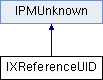
Public Types | |
| enum | { kDefaultIID = IID_IXREFERENCEUID } |
Public Member Functions | |
| virtual int32 | BeginXRefSession (IDataBase *pSrcDB, IDataBase *pDestDB)=0 |
| virtual int32 | EndXRefSession ()=0 |
| virtual IDataBase * | GetSrcDB ()=0 |
| virtual IDataBase * | GetDestDB ()=0 |
| virtual UID | GetDestUID (IDataBase *pSrcDB, IDataBase *pDestDB, UID srcID)=0 |
| virtual void | BindSrcAndDestUID (IDataBase *pSrcDB, IDataBase *pDestDB, UID srcUID, UID destUID)=0 |
| virtual void | UnbindSrcUID (IDataBase *pSrcDB, IDataBase *pDestDB, UID srcUID)=0 |
| virtual ICommand * | GetDeferredCmd (IDataBase *pSrcDB, IDataBase *pDestDB, UID srcID) const =0 |
| virtual void | BindDeferredCmd (IDataBase *pSrcDB, IDataBase *pDestDB, UID srcID, ICommand *pCmd)=0 |
 Public Member Functions inherited from IPMUnknown Public Member Functions inherited from IPMUnknown | |
| virtual IPMUnknown * | QueryInterface (PMIID interfaceID) const =0 |
| virtual void | AddRef () const =0 |
| virtual void | Release () const =0 |
IXReferenceUID is used during copy operations to keep track of the copy context.

If you have an object A that contains a UID to B, then if you are doing a copy of

both A and B you would like for the resulting A' to reference B'. IXReferenceUID

is the class that makes this happen for you.


Here's how it works. You group your copy operations together into a copy session.

You call BeginXRefSession to start a new session. The session keeps a mapping of

source UID to destination UID for every object that has been copied via IScrapUtils,

or one of the standard copy commands. If an object has already been copied, the

UID gets fetched back from IXReferenceUID instead of creating a whole other object.

If the object has not yet been copied, a copy is made and a mapping for it added

to IXReferenceUID.


<pre>

InterfacePtr<IXReferenceUID> xRef(GetExecutionContextSession(), UseDefaultIID());

xRef->BeginXRefSession(srcDB, destinationDB);
... Your copy operations go here...
xRef->EndXRefSession();

</pre>


Calls to BeginXRefSession/EndXRefSession may be nested. If the nested context has

the same source and destination databases as the enclosing context, then the UIDs

that are added in the nested context are still accessible to the enclosing context

after the nested context has been ended (EndXRefSession called). But if the databases

don't match, then the nested context supercedes the enclosing context until the

EndXRefSession is called, at which point the UIDs added in the nested context are

popped off and the enclosing context is restored.
| pure virtual |
Start a new copy context.
| pSrcDB | source database |
| pDestDB | destination database |
| pure virtual |
Associate a command with the current context, to be processed when the context is ended. This is NOT a recommended way to solve problems, it is inherently fragile.
| pSrcDB | source database |
| pDestDB | destination database |
| srcID | source UID |
| pCmd | the command to defer |
| pure virtual |
Add a new <sourceUID, destinationUID> mapping to the current context.
| pSrcDB | source database |
| pDestDB | destination database |
| srcID | source UID |
| destUID | destination UID |
| pure virtual |
End a copy context.
| pure virtual |
A copy sesion may have commands associated with it that are waiting for a safe time to be processed. If there are deferred commands associated with the current context they will be processed when EndXRefSession is called for the context.
| pSrcDB | source database |
| pDestDB | destination database |
| srcID | source UID |
| pure virtual |
Return the destination database of the current context, or nil if there's no context.
| pure virtual |
Get the destination UID that matches the source UID, if there is one.
| pSrcDB | source database |
| pDestDB | destination database |
| srcID | source UID |
| pure virtual |
Return the source database of the current context, or nil if there's no context.
 1.8.3.1
