 | InDesign SDK 20.5 |
#include <ICommandSequence.h>
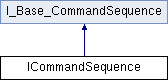
Additional Inherited Members | |
 Public Member Functions inherited from I_Base_CommandSequence Public Member Functions inherited from I_Base_CommandSequence | |
| virtual ICommand::Undoability | GetUndoability () const =0 |
| virtual void | SetUndoability (ICommand::Undoability newUndoability)=0 |
| virtual void | GetName (PMString *name) const =0 |
| virtual void | SetName (const PMString &newName)=0 |
| virtual void | AddReference ()=0 |
| virtual void | ReleaseReference ()=0 |
| virtual const char * | GetTrackingData ()=0 |
A regular command sequence groups any number of commands to a single undoable

step in the command history. When the sequence ends, the changes made by

the commands within the sequence are committed if the global error code is

kSuccess, otherwise the database is rolled back to its state before the

sequence started.


Stack-based helper classes CmdUtils::SequencePtr and CmdUtils::SequenceContext

make it easier to write a sequence and avoid having to call

CmdUtils::BeginCommandSequence() and CmdUtils::EndCommandSequence(ICommandSequence *)

yourself. For example:

<pre>

{
The SequencePtr constructor creates a new sequence. SequencePtr seq; seq->SetName(PMString("Your Sequence Name")); if (ProcessFirstCommand() == kSuccess)) { ProcessSecondCommand(); } When the SequencePtr object goes out of scope the destructor ends the sequence. }
Alternatively call CmdUtils::BeginCommandSequence() to create a new sequence. After you are done with processing commands call CmdUtils::EndCommandSequence(ICommandSequence *). Do not use the sequence again afterwards.
 1.8.3.1
