 | InDesign SDK 20.5 |
#include <ITextFrameOptionsData.h>
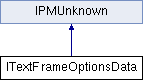
Public Types | |
| enum | { kDefaultIID = IID_ITEXTFRAMEDIALOGOPTIONSDATA } |
| enum | SelectionTypes { allRectangles, allNonRectangles, mixedOrUnsupported, nothing } |
| enum | OptionState { unInitialized, mixedValues, unChanged, changed } |
| enum | EachInsetState { LeftInvalid = ITextInset::kLeft, TopInvalid = ITextInset::kTop, RightInvalid = ITextInset::kRight, BottomInvalid = ITextInset::kBottom, LeftChanged = ITextInset::kLeft<<4, TopChanged = ITextInset::kTop<<4, RightChanged = ITextInset::kRight<<4, BottomChanged = ITextInset::kBottom<<4 } |
Public Member Functions | |
| virtual bool16 | ProcessTextFrameOptions (UIDList &mcfList)=0 |
| virtual void | Reset ()=0 |
| virtual void | ResetToOther (ITextFrameOptionsData *other)=0 |
| virtual bool16 | GetPreviewMode () const =0 |
| virtual void | SetPreviewMode (bool16 newState)=0 |
| virtual bool16 | GetForceRedundant () const =0 |
| virtual OptionState | GetNumberOfColumnsState () const =0 |
| virtual bool16 | GetColumnWidthIsDisplayable () const =0 |
| virtual int32 | GetNumberOfColumns () const =0 |
| virtual void | AddInNumberOfColumns (int32 numberOfColumns)=0 |
| virtual void | UpdateNumberOfColumns (int32 numberOfColumns)=0 |
| virtual OptionState | GetUseFixedWidthColumnsState () const =0 |
| virtual bool16 | GetUseFixedWidthColumns () const =0 |
| virtual void | AddInUseFixedWidthColumns (bool16 useFixedWidthColumns)=0 |
| virtual void | UpdateUseFixedWidthColumns (bool16 useFixedWidthColumns)=0 |
| virtual OptionState | GetColumnWidthState () const =0 |
| virtual PMReal | GetColumnWidth () const =0 |
| virtual void | AddInColumnWidth (PMReal columnWidth)=0 |
| virtual void | UpdateColumnWidth (PMReal columnWidth)=0 |
| virtual OptionState | GetUseFlexibleWidthColumnsState () const =0 |
| virtual bool16 | GetUseFlexibleWidthColumns () const =0 |
| virtual void | AddInUseFlexibleWidthColumns (bool16 useFlexibleWidthColumns)=0 |
| virtual void | UpdateUseFlexibleWidthColumns (bool16 useFlexibleWidthColumns)=0 |
| virtual OptionState | GetFlexibleColumnWidthMaxState () const =0 |
| virtual PMReal | GetFlexibleColumnWidthMax () const =0 |
| virtual void | AddInFlexibleColumnWidthMax (PMReal flexibleColumnWidthMax)=0 |
| virtual void | UpdateFlexibleColumnWidthMax (PMReal flexibleColumnWidthMax)=0 |
| virtual OptionState | GetGutterWidthState () const =0 |
| virtual PMReal | GetGutterWidth () const =0 |
| virtual void | AddInGutterWidth (PMReal gutterWidth)=0 |
| virtual void | UpdateGutterWidth (PMReal gutterWidth)=0 |
| virtual OptionState | GetVerticalJustifyState () const =0 |
| virtual Text::VerticalJustification | GetVerticalJustify () const =0 |
| virtual void | AddInVerticalJustify (Text::VerticalJustification verticalJustify)=0 |
| virtual void | UpdateVerticalJustify (Text::VerticalJustification verticalJustify)=0 |
| virtual OptionState | GetMaxVJInterParaSpaceState () const =0 |
| virtual PMReal | GetMaxVJInterParaSpace () const =0 |
| virtual void | AddInMaxVJInterParaSpace (PMReal maxVJInterParaSpace)=0 |
| virtual void | UpdateMaxVJInterParaSpace (PMReal maxVJInterParaSpace)=0 |
| virtual OptionState | GetVJBalanceColumnsState () const =0 |
| virtual bool16 | GetVJBalanceColumns () const =0 |
| virtual void | AddInVJBalanceColumns (bool16 vjBalanceColumns)=0 |
| virtual void | UpdateVJBalanceColumns (bool16 vjBalanceColumns)=0 |
| virtual OptionState | GetFirstLineOffsetState () const =0 |
| virtual Text::FirstLineOffsetMetric | GetFirstLineOffset () const =0 |
| virtual void | AddInFirstLineOffset (Text::FirstLineOffsetMetric firstLineOffset)=0 |
| virtual void | UpdateFirstLineOffset (Text::FirstLineOffsetMetric firstLineOffset)=0 |
| virtual OptionState | GetMinFirstLineOffsetState () const =0 |
| virtual PMReal | GetMinFirstLineOffset () const =0 |
| virtual void | AddInMinFirstLineOffset (PMReal minFirstLineOffset)=0 |
| virtual void | UpdateMinFirstLineOffset (PMReal minFirstLineOffset)=0 |
| virtual OptionState | GetIgnoreWrapState () const =0 |
| virtual bool16 | GetIgnoreWrap () const =0 |
| virtual void | AddInIgnoreWrap (bool16 ignoreWrap)=0 |
| virtual void | UpdateIgnoreWrap (bool16 ignoreWrap)=0 |
| virtual OptionState | GetInsetsState (int32 *eachInset=nil) const =0 |
| virtual PMRect | GetInsets () const =0 |
| virtual void | AddInInsets (PMRect insets)=0 |
| virtual void | UpdateInsetLeft (PMReal left)=0 |
| virtual void | UpdateInsetTop (PMReal top)=0 |
| virtual void | UpdateInsetRight (PMReal right)=0 |
| virtual void | UpdateInsetBottom (PMReal bottom)=0 |
| virtual void | UpdateInsets (PMRect insets)=0 |
| virtual int32 | GetIndividualInsetsInvalidity () const =0 |
| virtual bool16 | UserChangedWidth () const =0 |
| virtual void | SetUserChangedWidth (bool16 changed)=0 |
| virtual SelectionTypes | GetSelectionType () const =0 |
| virtual void | AddInSelectionType (SelectionTypes selectionType)=0 |
| virtual OptionState | GetUseCustomBaselineGridFlagState () const =0 |
| virtual bool16 | GetUseCustomBaselineGridFlag () const =0 |
| virtual void | AddInUseCustomBaselineGridFlag (bool16 flag)=0 |
| virtual void | UpdateUseCustomBaselineGridFlag (bool16 flag)=0 |
| virtual OptionState | GetRelativeOptionState () const =0 |
| virtual IBaselineFrameGridData::RelativeOption | GetRelativeOption () const =0 |
| virtual void | AddInRelativeOption (IBaselineFrameGridData::RelativeOption relativeOption)=0 |
| virtual void | UpdateRelativeOption (IBaselineFrameGridData::RelativeOption relativeOption)=0 |
| virtual OptionState | GetStartingOffsetState () const =0 |
| virtual PMReal | GetStartingOffset () const =0 |
| virtual void | AddInStartingOffset (PMReal staringOffset)=0 |
| virtual void | UpdateStartingOffset (PMReal staringOffset)=0 |
| virtual OptionState | GetIncrementState () const =0 |
| virtual PMReal | GetIncrement () const =0 |
| virtual void | AddInIncrement (PMReal increment)=0 |
| virtual void | UpdateIncrement (PMReal increment)=0 |
| virtual OptionState | GetBaselineFrameGridColorState () const =0 |
| virtual UID | GetBaselineFrameGridColor () const =0 |
| virtual void | AddInBaselineFrameGridColor (UID colorUID)=0 |
| virtual void | UpdateBaselineFrameGridColor (UID colorUID)=0 |
| virtual bool16 | ProcessBaselineFrameGridOptions (UIDList &mcfList, bool16 convertColorUIDToLayerColor)=0 |
| virtual OptionState | GetAutoSizeDimensionState () const =0 |
| virtual Text::AutoSizeDimension | GetAutoSizeDimension () const =0 |
| virtual void | AddInAutoSizeDimension (Text::AutoSizeDimension autoSizeDimension)=0 |
| virtual void | UpdateAutoSizeDimension (Text::AutoSizeDimension autoSizeDimension)=0 |
| virtual OptionState | GetAutoSizeRefPointState () const =0 |
| virtual IReferencePointData::ReferencePointPosition | GetAutoSizeRefPoint () const =0 |
| virtual void | AddInAutoSizeRefPoint (IReferencePointData::ReferencePointPosition autoSizeRefPoint)=0 |
| virtual void | UpdateAutoSizeRefPoint (IReferencePointData::ReferencePointPosition autoSizeRefPoint)=0 |
| virtual OptionState | GetAutoSizeHasMinHeightState () const =0 |
| virtual bool16 | GetAutoSizeHasMinHeight () const =0 |
| virtual void | AddInAutoSizeHasMinHeight (bool16 autoSizeHasMinHeight)=0 |
| virtual void | UpdateAutoSizeHasMinHeight (bool16 autoSizeHasMinHeight)=0 |
| virtual OptionState | GetAutoSizeMinHeightValueState () const =0 |
| virtual PMReal | GetAutoSizeMinHeightValue () const =0 |
| virtual void | AddInAutoSizeMinHeightValue (PMReal autoSizeMinHeightValue)=0 |
| virtual void | UpdateAutoSizeMinHeightValue (PMReal autoSizeMinHeightValue)=0 |
| virtual OptionState | GetAutoSizeHasMinWidthState () const =0 |
| virtual bool16 | GetAutoSizeHasMinWidth () const =0 |
| virtual void | AddInAutoSizeHasMinWidth (bool16 autoSizeHasMinWidth)=0 |
| virtual void | UpdateAutoSizeHasMinWidth (bool16 autoSizeHasMinWidth)=0 |
| virtual OptionState | GetAutoSizeMinWidthValueState () const =0 |
| virtual PMReal | GetAutoSizeMinWidthValue () const =0 |
| virtual void | AddInAutoSizeMinWidthValue (PMReal autoSizeMinWidthValue)=0 |
| virtual void | UpdateAutoSizeMinWidthValue (PMReal autoSizeMinWidthValue)=0 |
| virtual OptionState | GetAutoSizeNoLineBreakState () const =0 |
| virtual bool16 | GetAutoSizeNoLineBreak () const =0 |
| virtual void | AddInAutoSizeNoLineBreak (bool16 autoSizeNoLineBreak)=0 |
| virtual void | UpdateAutoSizeNoLineBreak (bool16 autoSizeNoLineBreak)=0 |
| virtual OptionState | GetFootnoteOptionsHasEnableOverridesState () const =0 |
| virtual bool16 | GetFootnoteOptionsHasEnableOverrides () const =0 |
| virtual void | AddInFootnoteOptionsHasEnableOverrides (bool16 enableOverrides)=0 |
| virtual void | UpdateFootnoteOptionsHasEnableOverrides (bool16 enableOverrides)=0 |
| virtual OptionState | GetFootnoteOptionsHasSpanFootnotesAcrossState () const =0 |
| virtual bool16 | GetFootnoteOptionsHasSpanFootnotesAcross () const =0 |
| virtual void | AddInFootnoteOptionsHasSpanFootnotesAcross (bool16 spanFootnotesAcross)=0 |
| virtual void | UpdateFootnoteOptionsHasSpanFootnotesAcross (bool16 spanFootnotesAcross)=0 |
| virtual OptionState | GetFootnoteOptionsMinimumSpacingValueState () const =0 |
| virtual PMReal | GetFootnoteOptionsMinimumSpacingValue () const =0 |
| virtual void | AddInFootnoteOptionsMinimumSpacingValue (PMReal minimumSpacing)=0 |
| virtual void | UpdateFootnoteOptionsMinimumSpacingValue (PMReal minimumSpacing)=0 |
| virtual OptionState | GetFootnoteOptionsSpaceBetweenFootnotesValueState () const =0 |
| virtual PMReal | GetFootnoteOptionsSpaceBetweenFootnotesValue () const =0 |
| virtual void | AddInFootnoteOptionsSpaceBetweenFootnotesValue (PMReal spaceBetweenFootnotes)=0 |
| virtual void | UpdateFootnoteOptionsSpaceBetweenFootnotesValue (PMReal spaceBetweenFootnotes)=0 |
| virtual bool16 | ProcessTextFrameFootnoteOptions (UIDList &mcfList)=0 |
| virtual OptionState | GetUseVerticalRuleState () const =0 |
| virtual bool16 | GetUseVerticalRule () const =0 |
| virtual void | AddInUseVerticalRule (bool16 useVerticalRule)=0 |
| virtual void | UpdateUseVerticalRule (bool16 useVerticalRule)=0 |
| virtual OptionState | GetVerticalRuleOffsetState () const =0 |
| virtual PMReal | GetVerticalRuleOffset () const =0 |
| virtual void | AddInVerticalRuleOffset (PMReal verticalRuleOffset)=0 |
| virtual void | UpdateVerticalRuleOffset (PMReal verticalRuleOffset)=0 |
| virtual OptionState | GetVerticalRuleTopInsetState () const =0 |
| virtual PMReal | GetVerticalRuleTopInset () const =0 |
| virtual void | AddInVerticalRuleTopInset (PMReal verticalRuleTopInset)=0 |
| virtual void | UpdateVerticalRuleTopInset (PMReal verticalRuleTopInset)=0 |
| virtual OptionState | GetVerticalRuleInsetChainState () const =0 |
| virtual void | AddInVerticalRuleInsetChain (bool16 isChained)=0 |
| virtual void | UpdateVerticalRuleInsetChain (bool16 isChained)=0 |
| virtual bool16 | GetVerticalRuleInsetChain () const =0 |
| virtual OptionState | GetVerticalRuleBottomInsetState () const =0 |
| virtual PMReal | GetVerticalRuleBottomInset () const =0 |
| virtual void | AddInVerticalRuleBottomInset (PMReal verticalRuleBottomInset)=0 |
| virtual void | UpdateVerticalRuleBottomInset (PMReal verticalRuleBottomInset)=0 |
| virtual OptionState | GetVerticalRuleStrokeWidthState () const =0 |
| virtual PMReal | GetVerticalRuleStrokeWidth () const =0 |
| virtual void | AddInVerticalRuleStrokeWidth (PMReal verticalRuleStrokeWidth)=0 |
| virtual void | UpdateVerticalRuleStrokeWidth (PMReal verticalRuleStrokeWidth)=0 |
| virtual OptionState | GetVerticalRuleStrokeColorState () const =0 |
| virtual UID | GetVerticalRuleStrokeColor () const =0 |
| virtual void | AddInVerticalRuleStrokeColor (UID verticalRuleStrokeColorUID)=0 |
| virtual void | UpdateVerticalRuleStrokeColor (UID verticalRuleStrokeColorUID)=0 |
| virtual OptionState | GetVerticalRuleStrokeTypeState () const =0 |
| virtual void | AddInVerticalRuleStrokeType (ICompositionStyle::StrokeType verticalRuleStrokeType)=0 |
| virtual void | UpdateVerticalRuleStrokeType (ICompositionStyle::StrokeType verticalRuleStrokeType)=0 |
| virtual ICompositionStyle::StrokeType | GetVerticalRuleStrokeType () const =0 |
| virtual OptionState | GetVerticalRuleTintState () const =0 |
| virtual void | AddInVerticalRuleTint (PMReal tint)=0 |
| virtual void | UpdateVerticalRuleTint (PMReal tint)=0 |
| virtual PMReal | GetVerticalRuleTint () const =0 |
| virtual OptionState | GetVerticalRuleOverprintState () const =0 |
| virtual void | AddInVerticalRuleOverprint (bool16 isOverprint)=0 |
| virtual void | UpdateVerticalRuleOverprint (bool16 isOverprint)=0 |
| virtual bool16 | GetVerticalRuleOverprint () const =0 |
| virtual OptionState | GetVerticalRuleHeightModeState () const =0 |
| virtual void | AddInVerticalRuleHeightMode (IVerticalColumnRuleData::VerticalRuleHeightMode verticalRuleHeightMode)=0 |
| virtual void | UpdateVerticalRuleHeightMode (IVerticalColumnRuleData::VerticalRuleHeightMode verticalRuleHeightMode)=0 |
| virtual IVerticalColumnRuleData::VerticalRuleHeightMode | GetVerticalRuleHeightMode () const =0 |
| virtual bool16 | ProcessTextFrameVerticalRuleOptions (UIDList &mcfList)=0 |
 Public Member Functions inherited from IPMUnknown Public Member Functions inherited from IPMUnknown | |
| virtual IPMUnknown * | QueryInterface (PMIID interfaceID) const =0 |
| virtual void | AddRef () const =0 |
| virtual void | Release () const =0 |
Usage: This object works off a state variable. The states are as follows: unInitialized -> add-in -> update
unInitialized is the state between construction and the first item being incorporated add-in is the state when items are being incorporated update is the state after all items have been incorporated (and the dialog is shown).
Basically, when initializing the dialog, use the AddInXXX methods when the dialog is open, use the UpdateXXX methods
Dialog constructed: When initializing (the dialog), the caller should call the InitXXX methods. Not only does this set the value of that option, but it also sets internal state for later on.
SelectionSuite processing: When incorporating the selection, each (applicable) selected item is incorporated into the object.
Dialog open: When the user updates a field in the dialog, the handler should call the UpdateXXX methods. Not only does this set the value of that option, but it also updates internal state.
EachInsetState: The location of the state bits for the individual inset values.
OptionState: The state of a option. Values are as follows: unInitialized: no value set - invalid (clients should treat as opaque) mixedValues: due to the selection, this option does not have a value that can be displayed. This is the default state, so if you forget to call an Init method, you cannot set that value. unChanged: the value in the dialog has never been changed - it still matches the selection, no matter how the dialog is closed/used. changed: the value in the dialog was at one time changed. The attribute values should not be accessed if the state is "unInitialized" or "mixedValues"
SelectionTypes: the entire selection can be composed of differing objects. All we care about is whether anything is selected and, if so, are they homogenous or not and if the former, the type.
| pure virtual |
Call this method when the dialog is created (before anything else) for the attribute.
The AddIn* method is used during dialog set up to add that attribute to the accumulated state for each object selected.
| pure virtual |
Call this method when the dialog is created (before anything else) for the attribute.
The AddIn* method is used during dialog set up to add that attribute to the accumulated state for each object selected.
| pure virtual |
Call this method when the dialog is created (before anything else) for the attribute.
The AddIn* method is used during dialog set up to add that attribute to the accumulated state for each object selected.
| pure virtual |
Call this method when the dialog is created (before anything else) for the attribute.
The AddIn* method is used during dialog set up to add that attribute to the accumulated state for each object selected.
| pure virtual |
Call this method when the dialog is created (before anything else) for the attribute.
The AddIn* method is used during dialog set up to add that attribute to the accumulated state for each object selected.
| pure virtual |
Call this method when the dialog is created (before anything else) for the attribute.
The AddIn* method is used during dialog set up to add that attribute to the accumulated state for each object selected.
| pure virtual |
Call this method when the dialog is created (before anything else) for the attribute.
The AddIn* method is used during dialog set up to add that attribute to the accumulated state for each object selected.
| pure virtual |
Call this method when the dialog is created (before anything else) for the attribute.
The AddIn* method is used during dialog set up to add that attribute to the accumulated state for each object selected.
| pure virtual |
Call this method when the dialog is created (before anything else) for the attribute.
The AddIn* method is used during dialog set up to add that attribute to the accumulated state for each object selected.
| pure virtual |
Call this method when the dialog is created (before anything else) for the attribute.
The AddIn* method is used during dialog set up to add that attribute to the accumulated state for each object selected.
| pure virtual |
Call this method when the dialog is created (before anything else) for the attribute.
The AddIn* method is used during dialog set up to add that attribute to the accumulated state for each object selected.
| pure virtual |
Call this method when the dialog is created (before anything else) for the attribute.
The AddIn* method is used during dialog set up to add that attribute to the accumulated state for each object selected.
| pure virtual |
Call this method when the dialog is created (before anything else) for the attribute.
The AddIn* method is used during dialog set up to add that attribute to the accumulated state for each object selected.
| pure virtual |
Call this method when the dialog is created (before anything else) for the attribute.
The AddIn* method is used during dialog set up to add that attribute to the accumulated state for each object selected.
| pure virtual |
Call this method when the dialog is created (before anything else) for the attribute.
The AddIn* method is used during dialog set up to add that attribute to the accumulated state for each object selected.
| pure virtual |
Call this method when the dialog is created (before anything else) for the attribute.
The AddIn* method is used during dialog set up to add that attribute to the accumulated state for each object selected.
| pure virtual |
Call this method when the dialog is created (before anything else) for the attribute.
The AddIn* method is used during dialog set up to add that attribute to the accumulated state for each object selected.
| pure virtual |
Call this method when the dialog is created (before anything else) for the attribute.
The AddIn* method is used during dialog set up to add that attribute to the accumulated state for each object selected.
| pure virtual |
There are 3 cases for insets: 1) If no selection or the selection is all rectangles, then each side of the rectangle can have a seperate inset. In this case, the PMRect reflects accordingly. 2) If the selection is all (or a single) non-rectangles, then only a single inset applies to all sides. In this case, the Top() value of the PMRect is valid (although all the fields are == Top, for convenience).
The above 3 states are represented by GetSelectionType();
The AddIn* method is used during dialog set up to add that attribute to the accumulated state for each object selected.
| pure virtual |
Call this method when the dialog is created (before anything else) for the attribute.
The AddIn* method is used during dialog set up to add that attribute to the accumulated state for each object selected.
| pure virtual |
Call this method when the dialog is created (before anything else) for the attribute.
The AddIn* method is used during dialog set up to add that attribute to the accumulated state for each object selected.
| pure virtual |
Call this method when the dialog is created (before anything else) for the attribute.
The AddIn* method is used during dialog set up to add that attribute to the accumulated state for each object selected.
| pure virtual |
Call this method when the dialog is created (before anything else) for the attribute.
The AddIn* method is used during dialog set up to add that attribute to the accumulated state for each object selected.
| pure virtual |
Internal state - not used by active dialog
This method is used during dialog set up to determine the VJ and selection states.
| pure virtual |
Call this method when the dialog is created (before anything else) for the attribute.
The AddIn* method is used during dialog set up to add that attribute to the accumulated state for each object selected.
| pure virtual |
Call this method when the dialog is created (before anything else) for the attribute.
The AddIn* method is used during dialog set up to add that attribute to the accumulated state for each object selected.
| pure virtual |
Call this method when the dialog is created (before anything else) for the attribute.
The AddIn* method is used during dialog set up to add that attribute to the accumulated state for each object selected.
| pure virtual |
Call this method when the dialog is created (before anything else) for the attribute.
The AddIn* method is used during dialog set up to add that attribute to the accumulated state for each object selected.
| pure virtual |
Call this method when the dialog is created (before anything else) for the attribute.
The AddIn* method is used during dialog set up to add that attribute to the accumulated state for each object selected.
| pure virtual |
Call this method when the dialog is created (before anything else) for the attribute.
The AddIn* method is used during dialog set up to add that attribute to the accumulated state for each object selected.
| pure virtual |
Call this method when the dialog is created (before anything else) for the attribute.
The AddIn* method is used during dialog set up to add that attribute to the accumulated state for each object selected.
| pure virtual |
Call this method when the dialog is created (before anything else) for the attribute.
The AddIn* method is used during dialog set up to add that attribute to the accumulated state for each object selected.
| pure virtual |
Call this method when the dialog is created (before anything else) for the attribute.
The AddIn* method is used during dialog set up to add that attribute to the accumulated state for each object selected.
| pure virtual |
Call this method when the dialog is created (before anything else) for the attribute.
The AddIn* method is used during dialog set up to add that attribute to the accumulated state for each object selected.
| pure virtual |
Call this method when the dialog is created (before anything else) for the attribute.
The AddIn* method is used during dialog set up to add that attribute to the accumulated state for each object selected.
| pure virtual |
Call this method when the dialog is created (before anything else) for the attribute.
The AddIn* method is used during dialog set up to add that attribute to the accumulated state for each object selected.
| pure virtual |
Call this method when the dialog is created (before anything else) for the attribute.
The AddIn* method is used during dialog set up to add that attribute to the accumulated state for each object selected.
| pure virtual |
Call this method when the dialog is created (before anything else) for the attribute.
The AddIn* method is used during dialog set up to add that attribute to the accumulated state for each object selected.
| pure virtual |
Call this method when the dialog is created (before anything else) for the attribute.
The AddIn* method is used during dialog set up to add that attribute to the accumulated state for each object selected.
| pure virtual |
Call this method when the dialog is created (before anything else) for the attribute.
The AddIn* method is used during dialog set up to add that attribute to the accumulated state for each object selected.
| pure virtual |
Call this method when the dialog is created (before anything else) for the attribute.
The AddIn* method is used during dialog set up to add that attribute to the accumulated state for each object selected.
| pure virtual |
Call this method when the dialog is created (before anything else) for the attribute.
The Get* methods return the current value of the attribute.
| pure virtual |
Call this method when the dialog is created (before anything else) for the attribute.
The Get*State method is used to determine whether the other methods can be called -
| pure virtual |
Call this method when the dialog is created (before anything else) for the attribute.
The Get* methods return the current value of the attribute.
| pure virtual |
Call this method when the dialog is created (before anything else) for the attribute.
The Get*State method is used to determine whether the other methods can be called -
| pure virtual |
Call this method when the dialog is created (before anything else) for the attribute.
The Get* methods return the current value of the attribute.
| pure virtual |
Call this method when the dialog is created (before anything else) for the attribute.
The Get*State method is used to determine whether the other methods can be called -
| pure virtual |
Call this method when the dialog is created (before anything else) for the attribute.
The Get* methods return the current value of the attribute.
| pure virtual |
Call this method when the dialog is created (before anything else) for the attribute.
The Get*State method is used to determine whether the other methods can be called -
| pure virtual |
Call this method when the dialog is created (before anything else) for the attribute.
The Get* methods return the current value of the attribute.
| pure virtual |
Call this method when the dialog is created (before anything else) for the attribute.
The Get*State method is used to determine whether the other methods can be called -
| pure virtual |
Call this method when the dialog is created (before anything else) for the attribute.
The Get* methods return the current value of the attribute.
| pure virtual |
Call this method when the dialog is created (before anything else) for the attribute. The Get*State method is used to determine whether the other methods can be called -
| pure virtual |
Call this method when the dialog is created (before anything else) for the attribute.
The Get* methods return the current value of the attribute.
| pure virtual |
Call this method when the dialog is created (before anything else) for the attribute.
The Get*State method is used to determine whether the other methods can be called -
| pure virtual |
Call this method when the dialog is created (before anything else) for the attribute.
The Get* methods return the current value of the attribute.
| pure virtual |
Call this method when the dialog is created (before anything else) for the attribute.
The Get*State method is used to determine whether the other methods can be called -
| pure virtual |
Call this method when the dialog is created (before anything else) for the attribute.
The Get* methods return the current value of the attribute.
| pure virtual |
Call this method to determine whether or not the Column Width can be displayed in the UI.
| pure virtual |
Call this method when the dialog is created (before anything else) for the attribute.
The Get*State method is used to determine whether the other methods can be called -
| pure virtual |
Call this method when the dialog is created (before anything else) for the attribute.
The Get* methods return the current value of the attribute.
| pure virtual |
Call this method when the dialog is created (before anything else) for the attribute.
The Get*State method is used to determine whether the other methods can be called -
| pure virtual |
Call this method when the dialog is created (before anything else) for the attribute.
The Get* methods return the current value of the attribute.
| pure virtual |
Call this method when the dialog is created (before anything else) for the attribute.
The Get*State method is used to determine whether the other methods can be called -
| pure virtual |
Call this method when the dialog is created (before anything else) for the attribute.
The Get* methods return the current value of the attribute.
| pure virtual |
Call this method when the dialog is created (before anything else) for the attribute. The Get*State method is used to determine whether the other methods can be called -
| pure virtual |
Call this method when the dialog is created (before anything else) for the attribute.
The Get* methods return the current value of the attribute.
| pure virtual |
Call this method when the dialog is created (before anything else) for the attribute. The Get*State method is used to determine whether the other methods can be called -
| pure virtual |
Call this method when the dialog is created (before anything else) for the attribute.
The Get* methods return the current value of the attribute.
| pure virtual |
Call this method when the dialog is created (before anything else) for the attribute. The Get*State method is used to determine whether the other methods can be called -
| pure virtual |
Call this method when the dialog is created (before anything else) for the attribute.
The Get* methods return the current value of the attribute.
| pure virtual |
Call this method when the dialog is created (before anything else) for the attribute. The Get*State method is used to determine whether the other methods can be called -
| pure virtual |
Prior to Basil we always fired the equivalent command for every change even though the change itself might be the same as the targets. This had the undesirable side effect for things such as ObjectStyles which might have had the the same values but firing the underlying command would create an unwanted override if it was an overriden masterpage item.
| pure virtual |
Call this method when the dialog is created (before anything else) for the attribute.
The Get* methods return the current value of the attribute.
| pure virtual |
Call this method when the dialog is created (before anything else) for the attribute.
The Get*State method is used to determine whether the other methods can be called -
| pure virtual |
Call this method when the dialog is created (before anything else) for the attribute.
The Get* methods return the current value of the attribute.
| pure virtual |
Call this method when the dialog is created (before anything else) for the attribute.
The Get*State method is used to determine whether the other methods can be called -
| pure virtual |
Call this method when the dialog is created (before anything else) for the attribute.
The Get* methods return the current value of the attribute.
| pure virtual |
Call this method when the dialog is created (before anything else) for the attribute.
The Get*State method is used to determine whether the other methods can be called -
| pure virtual |
Return which insets are NOT valid. e.g. returns ITextInset::kLeft | kTop | kRight | kBottom if all of those fields are mixedValues or otherwise invalid.
| pure virtual |
There are 3 cases for insets: 1) If no selection or the selection is all rectangles, then each side of the rectangle can have a seperate inset. In this case, the PMRect reflects accordingly. 2) If the selection is all (or a single) non-rectangles, then only a single inset applies to all sides. In this case, the Top() value of the PMRect is valid (although all the fields are == Top, for convenience).
The above 3 states are represented by GetSelectionType();
The Get* methods return the current value of the attribute.
| pure virtual |
There are 3 cases for insets: 1) If no selection or the selection is all rectangles, then each side of the rectangle can have a seperate inset. In this case, the PMRect reflects accordingly. 2) If the selection is all (or a single) non-rectangles, then only a single inset applies to all sides. In this case, the Top() value of the PMRect is valid (although all the fields are == Top, for convenience).
The above 3 states are represented by GetSelectionType();
Call this method when the dialog is created (before anything else) for the attribute.
The Get*State method is used to determine whether the other methods can be called -
| eachInset,: | if non-nil, the bits within will indicate whether each inset is valid/invalid, or changed/unChanged. Treat the same as if Get*State was called for each inset. See EachInsetState for bit locations. |
| pure virtual |
Call this method when the dialog is created (before anything else) for the attribute.
The Get* methods return the current value of the attribute.
| pure virtual |
Call this method when the dialog is created (before anything else) for the attribute.
The Get*State method is used to determine whether the other methods can be called -
| pure virtual |
Call this method when the dialog is created (before anything else) for the attribute.
The Get* methods return the current value of the attribute.
| pure virtual |
Call this method when the dialog is created (before anything else) for the attribute.
The Get*State method is used to determine whether the other methods can be called -
| pure virtual |
Call this method when the dialog is created (before anything else) for the attribute.
The Get* methods return the current value of the attribute.
| pure virtual |
Call this method when the dialog is created (before anything else) for the attribute.
The Get*State method is used to determine whether the other methods can be called -
| pure virtual |
Some fields depend on other fields and for auto-calculation, we need to know if preview is on or not.
| pure virtual |
Call this method when the dialog is created (before anything else) for the attribute.
The Get* methods return the current value of the attribute.
| pure virtual |
Call this method when the dialog is created (before anything else) for the attribute.
The Get*State method is used to determine whether the other methods can be called -
| pure virtual |
Internal state - not used by active dialog
This method is used during dialog set up to determine the VJ and selection states.
| pure virtual |
Call this method when the dialog is created (before anything else) for the attribute.
The Get* methods return the current value of the attribute.
| pure virtual |
Call this method when the dialog is created (before anything else) for the attribute.
The Get*State method is used to determine whether the other methods can be called -
| pure virtual |
Call this method when the dialog is created (before anything else) for the attribute.
The Get* methods return the current value of the attribute.
| pure virtual |
Call this method when the dialog is created (before anything else) for the attribute.
The Get*State method is used to determine whether the other methods can be called -
| pure virtual |
Call this method when the dialog is created (before anything else) for the attribute.
The Get* methods return the current value of the attribute.
| pure virtual |
Call this method when the dialog is created (before anything else) for the attribute.
The Get*State method is used to determine whether the other methods can be called -
| pure virtual |
Call this method when the dialog is created (before anything else) for the attribute.
The Get* methods return the current value of the attribute.
| pure virtual |
Call this method when the dialog is created (before anything else) for the attribute.
The Get*State method is used to determine whether the other methods can be called -
| pure virtual |
Call this method when the dialog is created (before anything else) for the attribute.
The Get* methods return the current value of the attribute.
| pure virtual |
Call this method when the dialog is created (before anything else) for the attribute.
The Get*State method is used to determine whether the other methods can be called -
| pure virtual |
Call this method when the dialog is created (before anything else) for the attribute.
The Get* methods return the current value of the attribute.
| pure virtual |
Call this method when the dialog is created (before anything else) for the attribute.
The Get*State method is used to determine whether the other methods can be called -
| pure virtual |
Call this method when the dialog is created (before anything else) for the attribute.
The Get* methods return the current value of the attribute.
| pure virtual |
Call this method when the dialog is created (before anything else) for the  attribute.


The Get*State method is used to determine whether the other methods can be called -@see OptionState
| pure virtual |
Call this method when the dialog is created (before anything else) for the attribute.
The Get* methods return the current value of the attribute.
| pure virtual |
Call this method when the dialog is created (before anything else) for the attribute.
The Get* methods return the current value of the attribute.
| pure virtual |
Call this method when the dialog is created (before anything else) for the attribute.
The Get* methods return the current value of the attribute.
| pure virtual |
Call this method when the dialog is created (before anything else) for the attribute.
The Get* methods return the current value of the attribute.
| pure virtual |
Call this method when the dialog is created (before anything else) for the attribute.
The Get* methods return the current value of the attribute.
| pure virtual |
Call this method when the dialog is created (before anything else) for the attribute.
The Get*State method is used to determine whether the other methods can be called -
| pure virtual |
Call this method when the dialog is created (before anything else) for the attribute.
The Get* methods return the current value of the attribute.
| pure virtual |
Call this method when the dialog is created (before anything else) for the attribute.
The Get* methods return the current value of the attribute.
| pure virtual |
Call this method when the dialog is created (before anything else) for the attribute.
The Get* methods return the current value of the attribute.
| pure virtual |
Call this method when the dialog is created (before anything else) for the attribute.
The Get*State method is used to determine whether the other methods can be called -
| pure virtual |
Call this method when the dialog is created (before anything else) for the attribute.
The Get* methods return the current value of the attribute.
| pure virtual |
Call this method when the dialog is created (before anything else) for the attribute.
The Get* methods return the current value of the attribute.
| pure virtual |
Call this method when the dialog is created (before anything else) for the attribute.
The Get* methods return the current value of the attribute.
| pure virtual |
Call this method when the dialog is created (before anything else) for the  attribute.


The Get*State method is used to determine whether the other methods can be called -@see OptionState
| pure virtual |
Call this method when the dialog is created (before anything else) for the attribute.
The Get* methods return the current value of the attribute.
| pure virtual |
Call this method when the dialog is created (before anything else) for the attribute.
The Get* methods return the current value of the attribute.
| pure virtual |
Call this method when the dialog is created (before anything else) for the attribute.
The Get* methods return the current value of the attribute.
| pure virtual |
Call this method when the dialog is created (before anything else) for the attribute.
The Get*State method is used to determine whether the other methods can be called -
| pure virtual |
Call this method when the dialog is created (before anything else) for the attribute.
The Get* methods return the current value of the attribute.
| pure virtual |
Call this method when the dialog is created (before anything else) for the attribute.
The Get*State method is used to determine whether the other methods can be called -
| pure virtual |
Call this to initialize the data from the list of objects (the selection). Return kTrue if any multicolumn objects are in the list, kFalse otherwise. convertColorUIDToLayerColor true if you want the actualy color that will be displayed, false means if you are using the layer color it will return kInvalidUID
| pure virtual |
Call this to initialize the data from the list of objects (the selection). Return kTrue if any multicolumn objects are in the list, kFalse otherwise.
| pure virtual |
Call this to initialize the data from the list of objects (the selection). Return kTrue if any multicolumn objects are in the list, kFalse otherwise.
| pure virtual |
Call this to initialize the data from the list of objects (the selection)
Return kTrue if any multicolumn objects are in the list, kFalse otherwise.
| pure virtual |
Call this when the dialog is created (before anything else).
| pure virtual |
Resets the data to match anothers.
| pure virtual |
Some fields depend on other fields and for auto-calculation, we need to know if preview is on or not.
| pure virtual |
Internal state - used only by active dialog
This method is used by the dialog when the user changes the (column) width attribute.
| pure virtual |
Call this method when the dialog is created (before anything else) for the attribute.
The Update* method is used during dialog activation to indicate the user has updated that attribute.
| pure virtual |
Call this method when the dialog is created (before anything else) for the attribute.
The Update* method is used during dialog activation to indicate the user has updated that attribute.
| pure virtual |
Call this method when the dialog is created (before anything else) for the attribute.
The Update* method is used during dialog activation to indicate the user has updated that attribute.
| pure virtual |
Call this method when the dialog is created (before anything else) for the attribute.
The Update* method is used during dialog activation to indicate the user has updated that attribute.
| pure virtual |
Call this method when the dialog is created (before anything else) for the attribute.
The Update* method is used during dialog activation to indicate the user has updated that attribute.
| pure virtual |
Call this method when the dialog is created (before anything else) for the attribute.
The Update* method is used during dialog activation to indicate the user has updated that attribute.
| pure virtual |
Call this method when the dialog is created (before anything else) for the attribute.
The Update* method is used during dialog activation to indicate the user has updated that attribute.
| pure virtual |
Call this method when the dialog is created (before anything else) for the attribute.
The Update* method is used during dialog activation to indicate the user has updated that attribute.
| pure virtual |
Call this method when the dialog is created (before anything else) for the attribute.
The Update* method is used during dialog activation to indicate the user has updated that attribute.
| pure virtual |
Call this method when the dialog is created (before anything else) for the attribute.
The Update* method is used during dialog activation to indicate the user has updated that attribute.
| pure virtual |
Call this method when the dialog is created (before anything else) for the attribute.
The Update* method is used during dialog activation to indicate the user has updated that attribute.
| pure virtual |
Call this method when the dialog is created (before anything else) for the attribute.
The Update* method is used during dialog activation to indicate the user has updated that attribute.
| pure virtual |
Call this method when the dialog is created (before anything else) for the attribute.
The Update* method is used during dialog activation to indicate the user has updated that attribute.
| pure virtual |
Call this method when the dialog is created (before anything else) for the attribute.
The Update* method is used during dialog activation to indicate the user has updated that attribute.
| pure virtual |
Call this method when the dialog is created (before anything else) for the attribute.
The Update* method is used during dialog activation to indicate the user has updated that attribute.
| pure virtual |
Call this method when the dialog is created (before anything else) for the attribute.
The Update* method is used during dialog activation to indicate the user has updated that attribute.
| pure virtual |
Call this method when the dialog is created (before anything else) for the attribute.
The Update* method is used during dialog activation to indicate the user has updated that attribute.
| pure virtual |
Call this method when the dialog is created (before anything else) for the attribute.
The Update* method is used during dialog activation to indicate the user has updated that attribute.
| pure virtual |
There are 3 cases for insets: 1) If no selection or the selection is all rectangles, then each side of the rectangle can have a seperate inset. In this case, the PMRect reflects accordingly. 2) If the selection is all (or a single) non-rectangles, then only a single inset applies to all sides. In this case, the Top() value of the PMRect is valid (although all the fields are == Top, for convenience).
The above 3 states are represented by GetSelectionType();
The Update* method is used during dialog activation to indicate the user has updated that attribute.
| pure virtual |
There are 3 cases for insets: 1) If no selection or the selection is all rectangles, then each side of the rectangle can have a seperate inset. In this case, the PMRect reflects accordingly. 2) If the selection is all (or a single) non-rectangles, then only a single inset applies to all sides. In this case, the Top() value of the PMRect is valid (although all the fields are == Top, for convenience).
The above 3 states are represented by GetSelectionType();
The Update* method is used during dialog activation to indicate the user has updated that attribute.
| pure virtual |
There are 3 cases for insets: 1) If no selection or the selection is all rectangles, then each side of the rectangle can have a seperate inset. In this case, the PMRect reflects accordingly. 2) If the selection is all (or a single) non-rectangles, then only a single inset applies to all sides. In this case, the Top() value of the PMRect is valid (although all the fields are == Top, for convenience).
The above 3 states are represented by GetSelectionType();
The Update* method is used during dialog activation to indicate the user has updated that attribute.
| pure virtual |
There are 3 cases for insets: 1) If no selection or the selection is all rectangles, then each side of the rectangle can have a seperate inset. In this case, the PMRect reflects accordingly. 2) If the selection is all (or a single) non-rectangles, then only a single inset applies to all sides. In this case, the Top() value of the PMRect is valid (although all the fields are == Top, for convenience).
The above 3 states are represented by GetSelectionType();
The Update* method is used during dialog activation to indicate the user has updated that attribute.
| pure virtual |
There are 3 cases for insets: 1) If no selection or the selection is all rectangles, then each side of the rectangle can have a seperate inset. In this case, the PMRect reflects accordingly. 2) If the selection is all (or a single) non-rectangles, then only a single inset applies to all sides. In this case, the Top() value of the PMRect is valid (although all the fields are == Top, for convenience).
The above 3 states are represented by GetSelectionType();
The Update* method is used during dialog activation to indicate the user has updated that attribute.
| pure virtual |
Call this method when the dialog is created (before anything else) for the attribute.
The Update* method is used during dialog activation to indicate the user has updated that attribute.
| pure virtual |
Call this method when the dialog is created (before anything else) for the attribute.
The Update* method is used during dialog activation to indicate the user has updated that attribute.
| pure virtual |
Call this method when the dialog is created (before anything else) for the attribute.
The Update* method is used during dialog activation to indicate the user has updated that attribute.
| pure virtual |
Call this method when the dialog is created (before anything else) for the attribute.
The Update* method is used during dialog activation to indicate the user has updated that attribute.
| pure virtual |
Call this method when the dialog is created (before anything else) for the attribute.
The Update* method is used during dialog activation to indicate the user has updated that attribute.
| pure virtual |
Call this method when the dialog is created (before anything else) for the attribute.
The Update* method is used during dialog activation to indicate the user has updated that attribute.
| pure virtual |
Call this method when the dialog is created (before anything else) for the attribute.
The Update* method is used during dialog activation to indicate the user has updated that attribute.
| pure virtual |
Call this method when the dialog is created (before anything else) for the attribute.
The Update* method is used during dialog activation to indicate the user has updated that attribute.
| pure virtual |
Call this method when the dialog is created (before anything else) for the attribute.
The Update* method is used during dialog activation to indicate the user has updated that attribute.
| pure virtual |
Call this method when the dialog is created (before anything else) for the attribute.
The Update* method is used during dialog activation to indicate the user has updated that attribute.
| pure virtual |
Call this method when the dialog is created (before anything else) for the attribute.
The Update* method is used during dialog activation to indicate the user has updated that attribute.
| pure virtual |
Call this method when the dialog is created (before anything else) for the attribute.
The Update* method is used during dialog activation to indicate the user has updated that attribute.
| pure virtual |
Call this method when the dialog is created (before anything else) for the attribute.
The Update* method is used during dialog activation to indicate the user has updated that attribute.
| pure virtual |
Call this method when the dialog is created (before anything else) for the attribute.
The Update* method is used during dialog activation to indicate the user has updated that attribute.
| pure virtual |
Call this method when the dialog is created (before anything else) for the attribute.
The Update* method is used during dialog activation to indicate the user has updated that attribute.
| pure virtual |
Call this method when the dialog is created (before anything else) for the attribute.
The Update* method is used during dialog activation to indicate the user has updated that attribute.
| pure virtual |
Call this method when the dialog is created (before anything else) for the attribute.
The Update* method is used during dialog activation to indicate the user has updated that attribute.
| pure virtual |
Call this method when the dialog is created (before anything else) for the attribute.
The Update* method is used during dialog activation to indicate the user has updated that attribute.
| pure virtual |
Call this method when the dialog is created (before anything else) for the attribute.
The Update* method is used during dialog activation to indicate the user has updated that attribute.
| pure virtual |
Call this method when the dialog is created (before anything else) for the attribute.
The Update* method is used during dialog activation to indicate the user has updated that attribute.
| pure virtual |
Call this method when the dialog is created (before anything else) for the attribute.
The Update* method is used during dialog activation to indicate the user has updated that attribute.
| pure virtual |
Internal state - used only by active dialog
This method is used by the dialog when the user changes the (column) width attribute.
 1.8.3.1
