 | InDesign SDK 20.5 |
#include <ProgressBar.h>
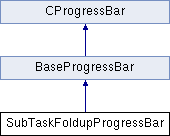
Public Member Functions | |
| SubTaskFoldupProgressBar (const PMString &strText, int32 startRange, int32 endRange) | |
| void | SetTaskText (const PMString &strText, bool16 forceRedraw=kTrue) |
 Public Member Functions inherited from BaseProgressBar Public Member Functions inherited from BaseProgressBar | |
| bool16 | WasCancelled (bool8 setGlobalErrorState=kTrue) |
| void | Abort () |
| void | DisableChildProgressBars (bool16 disable) |
| bool16 | WasRegisterSuccessful () |
| void | SetPosition (int32 newPosition) |
Additional Inherited Members | |
| Protected Member Functions inherited from BaseProgressBar | |
| BaseProgressBar (int32 nType, const PMString &progressDialogTitle, int32 taskStart, int32 taskEnd, bool8 showImmediate, bool8 showCancel, IProgressBarControlData *customProgress, bool32 useTwoBars) | |
| Protected Attributes inherited from BaseProgressBar | |
| IProgressBarManager * | fProgressMgr |
| int32 | fnBarID |
Sub task progress bar. This progress bar variant is only useful if you have already declared on of the other progress bars above you on the stack.
It doesn't display anything by itself. Instead, it:
1. Causes the next progress bar up to move through its current task smoothly as this progress bar goes to completion


2. Usually cause its text to be appended to the text that is currently displayed in the next progress bar up


3. Moves the next progress bar up one step forward when it reaches completion.
Intended to be used as a stack based object, the lifetime of the progress bar corresponding to the scope of the object.
| SubTaskFoldupProgressBar::SubTaskFoldupProgressBar | ( | const PMString & | strText, |
| int32 | startRange, | ||
| int32 | endRange | ||
| ) |
Constructor
| title | IN dialog title |
| startRange | IN value corresponding to the start of the bar |
| endRange | IN value corresponding to the end of the bar |
| void SubTaskFoldupProgressBar::SetTaskText | ( | const PMString & | strText, |
| bool16 | forceRedraw = kTrue | ||
| ) |
Set the task text for the current task.
 1.8.3.1
